EBOSACA Launches Expanded HIV Testing and Free Treatment Across Ebonyi State
Iteshi also announced the introduction of injectable PrEP, taken once every two months, for individuals at risk of HIV.
“Unlike the daily pill, this injectable option offers longer protection. We also distribute free condoms and run harm-reduction programs for people who inject drugs, including sterile needles,” he said.
He added that barbers, hairdressers, and beauty workers are being educated on sterilization practices to prevent transmission through sharp objects.
Outreach Provides Free Medical Services
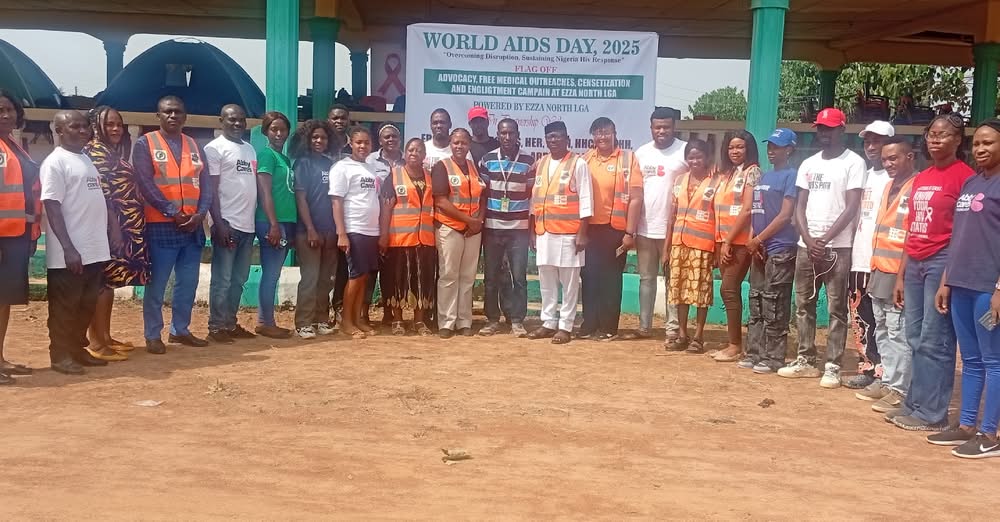
The event featured a free medical outreach conducted in partnership with Abby Care Foundation.Iteshi added that the Federal Government, through NACA and the Global Fund, is developing sustainability plans to help states gradually take over HIV programming.Despite progress, EBOSACA said reluctance to take HIV tests remains a major challenge.
“Testing is voluntary, and many people refuse out of fear or misinformation,” Iteshi said, urging residents to test every three months and take advantage of free services across health facilities,” he stressed.
Providing updated epidemiological insights, Dr. Ezekiel Nwakpa said the 2018 NAIIS report placed Ebonyi’s HIV prevalence at 0.8%, representing about 16,300 people.
He confirmed that 94 to 95% of these cases – 15,610 individuals have already been identified and placed on treatment.
According to him, the LGAs with the highest burden included Abakaliki – 1.2% prevalence, Edda (Afikpo South) and
Ohaozara about 0.9%, Afikpo North about 1.0% followed by Izzi and Ikwo council areas.
He noted that urban communities generally have a higher HIV burden than rural areas.Nwakpa warned that global HIV funding is shrinking and could end by 2030. “If donor support stops, free HIV drugs may no longer be free. Our LGA sensitization tour is also a call to government leaders to invest in HIV response for sustainability,” he said.
Medical Director of Abbys Care Foundation, Dr. Edit Nwankwo said the foundation focuses on reaching underserved communities, and has already attended to over 1,000 patients across several LGAs.
“Our team includes medical doctors, nurses, lab scientists, and pharmacists. We prioritize rural communities to ensure they access care they may otherwise go without,” she said.
Our Correspondent reports that the sensitization tour continues across other LGAs ahead of World AIDS Day, December 1, with the state intensifying community engagement, prevention campaigns, and treatment access.